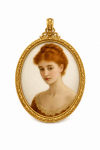
I had to get up very early this morning. I was heading to Saint-Omer, where Françoise Cadet, widow Tavernier, had invited me to tell me a few home truths about her in-laws. As I explained in the article « Our Half-Brother Charles Joseph, » Charles Joseph Tavernier was only eight years old when his mother married Edmé François Courageux. Like his stepfather and his half-brothers, he became a locksmith. Let us see what this good woman has to reveal.
At my doorstep the cold struck me immediately. No snow on this December 15th, but an icy northern wind. The glow of the street lamps reflected on the frozen ground. The frost had no time to imprison even the smallest blade of grass; it was swept away, swirling before melting against my blue-tinged face.
I struggled toward the omnibus stop. The departure was delayed — the wheels had frozen. In the workshop, people were bustling about, and we were invited inside the coaching inn where steaming coffee was served. I looked around and recognized young Desmoulins.
Not that he had started his weekend on a Thursday. Certainly not! Let me not be too quick to gossip; perhaps he had gone to help a family member.
The horses’ neighing and the coachman’s shouting as he tried to calm his animals brought me back to reality.
The door opened, and a man wrapped up to his ears asked us to follow him.
The journey to Saint-Omer had been chaotic, even dangerous, but I had arrived safely. And by the way, young Desmoulins had indeed been expected by his uncle, not by some lady friend. That will teach me.
I took a carriage to Madame Tavernier’s home.
She was a small, round woman, neither pretty nor plain, with a strong country accent. Her family came from Wismes, a tiny little backwater southwest of Saint-Omer.
She had been forced to leave the apartment above the shop where she had lived with her husband. She now lived on the ground floor of a small dwelling she shared with her landlord. She had only two rooms: a living space and a kitchen. A cooking stove, a cupboard, a table, four chairs, a bed and a wardrobe made up the furniture.
She sat me at the table and poured me a large cup of coffee that had spent the night sitting on the stove plate.
“Warmed up now, Miss Rose? In weather like this, I wouldn’t have blamed you one bit if you hadn’t come.”
“Don’t worry, Madame Tavernier. It isn’t the first time I’ve traveled in weather like this.”
“That’s kind of you. No need for Madame — call me Françoise!”
“Very well, Françoise. What truths do you wish to share with me?”
“My Charles adored his stepfather. Worshipped him. That’s the right word, isn’t it?”
“Yes, Françoise, don’t worry about that.”
“His father died the year he was born. His mother married a man named Louis Carnet, but he died six years later. So he became attached to Edmé Courageux, who lived until 1820. He had six brothers and sisters, but only the twins, Jean-Baptiste and Marc-Augustin Courageux, survived.
We had four children ourselves. Fate had it in for us — they all left us.”
“My poor dear… life hasn’t been gentle with you. These little souls are born but are not always armed for life, so the Lord calls them back.”
I let her wipe away the tears rolling down her cheeks and gather her thoughts. She had just emptied her heart.
“I’m sorry. I didn’t ask you here to hear me complain.”
“No worries, Françoise. I’m here to listen.”
“Charles learned locksmithing from his brothers and his stepfather. The twins opened their own shop with help from their family. My Charles remained a worker. Even so, he’d bend over backward to help them. The wages were a little better than elsewhere, but money doesn’t replace affection.”
“What do you mean, Françoise? He wasn’t loved by his stepfather?”
“I wouldn’t say that. They were there when our children were born and when they died. They supported us. Helped us through every hardship. But Charles wanted something else.”
“Do you know what that was?”
“Yes, Miss Rose. He wanted his stepfather to adopt him and give him his name.”
“Did he ever ask?”
“I don’t know. I don’t think so.”
“Edmé couldn’t have guessed.”
“Of course not — and my Charles wasn’t exactly the sharpest when it came to hints.”
I was beginning to understand where this was going.
Françoise suddenly jumped to her feet, blushed, stammered a few words, and sat back down.
“Yes… it was me who gave the name Courageux when Charles was admitted to the hospital! I said nothing when his death was registered under the name he had always wished to carry.”
“But his brothers didn’t say anything?”
“They thought it was a mistake by the town hall, and changing it would’ve cost money.”

Her face softened. She was remembering the scene — the last gift to her man.
I took my leave. She offered me another cup of coffee, which I refused with perhaps a little too much enthusiasm. Françoise looked relieved. She had finally lifted that burden from her shoulders. She was an honest woman, that good soul.
I returned to the omnibus inn. The upstairs rooms would do just fine. I was going to order a good meal, write this article, and tomorrow I would head home.
This story is entirely fictional. I truly have no idea who made the mistake. The twins were often mentioned in Le Mémorial Artésien, the newspaper of the time. Charles and Françoise appeared only in civil records.
Charles Joseph Tavernier was born on March 14th, 1781, in Lillers (Pas-de-Calais). He died on December 3rd, 1831, and was buried under the name Charles Joseph Courageux.

