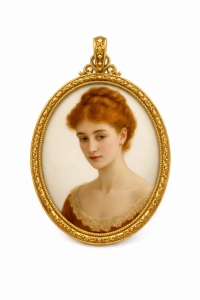
On this 18th of June 1894, I am on my way to the home of Ellen and Georges Le Petit. A few days earlier, a courier had delivered their invitation to me.
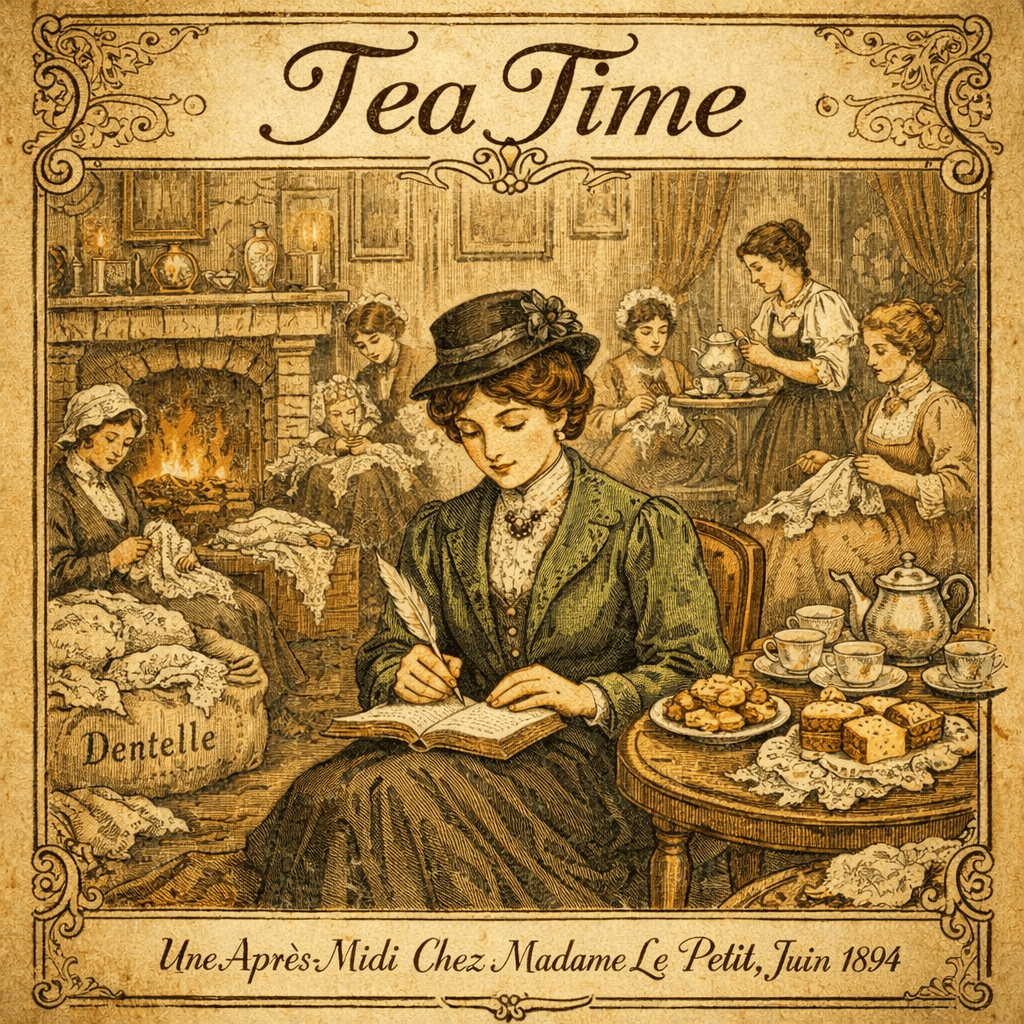
The air is still rather cool for a time so close to summer. I make my way towards the tram stop on Rue Gambetta. Just in time, I leap onto the platform where the employee punches my ticket. I sit in the first available seat. At the next stop, an older woman, her face sculpted by wind and sea air, places her baskets beside me. The powerful smell of fish quickly overcomes the scent of bodies confined within the small space. I almost feel grateful to the fishmonger. Here is my stop, the last one on Rue Lafayette. I step down and walk along the Marck Canal. Another hundred metres or so. I glance at my watch : half past one. I am not late. I knock at the door ; the maid opens it and leads me into the sitting room. In the hallway, large sacks filled with lace rest upon the floor. Against the main wall of the salon stands a stone fireplace where the last embers are slowly dying. The furniture has been moved aside to make room for a great number of chairs and armchairs arranged in a semicircle around a low table. A tea service waits upon a sideboard. Ellen invites me to sit beside her.
“Good afternoon, Mademoiselle Rose. You must be wondering why you have been invited to this family gathering.”
“Indeed, Madame Le Petit. You gave me no explanation in your letter.”
“Do not worry, Mademoiselle Rose. I would simply like you to become our ambassador before my family. From your pen shall come a pleasant and complete account.”
“And who will be present?”
“My daughters : Maud, Blanche, Hélène, and Célina ; my sisters-in-law and niece from Boulogne : Eugénie, Julia, Blanche, and Laure ; my future daughter-in-law and her mother : Elise and Léonie Calbet ; Elizabeth, the wife of my eldest son Francis Beckett Bellew. My mother-in-law, who is unwell, has declined the invitation.”
“So you would like a summary of the afternoon’s proceedings?”
“Exactly, Rose.”
“And what is all this lace piled up in your entrance hall for?”
“I do not know myself, my dear Rose. We were supposed to discuss the marriage of Georges and Elise. As you know, the men pay, but it is the women who organise everything.”
“But the wedding is not until November, if I remember correctly.”
“Indeed. My husband’s health has become fragile ; he can accept only a small amount of work now. Therefore, I must spread the expense over time.”
“That is most ingenious of you.”
“They are arriving now. We shall continue this conversation once they have gone.”
The ladies from Boulogne are the first to cross the threshold, followed by Elise and her mother. The maid goes upstairs to fetch Ellen’s daughters and serves refreshments.
After embraces and greetings, everyone takes their place. Célina is fourteen years old ; she wished to be present at this gathering. Ellen seats her beside herself, along with her future daughter-in-law, while the others settle according to their affinities. Each woman takes out her tulle bag, spreads a white cloth across her knees, and begins to work. The mistress of the house is intrigued, yet her good manners prevent her from asking questions. The conversation turns towards the forthcoming marriage. The date, the location, and each person’s involvement are decided. The youngest children will be looked after by a distant cousin, while all matters of a more private nature are reserved for the family circle.
Ellen glances at her watch : almost four o’clock. She rings for the servant ; it is time for tea. The ladies put away their work and go to wash their hands, stained by the traces of graphite still embedded within the patterns. We hear the kettle beginning to sing while the maid arranges cups, saucers, and spoons upon the low table. She prepares the tea and returns to the kitchen to fetch trays of small cakes. Skillfully, she comes back carrying them in both hands. Just as she is about to serve, Ellen dismisses her gently. She, Maud, and Célina will serve the tea themselves. With a deft hand, Ellen pours the steaming tea into the cups while Maud adds a small spoon and distributes the hot drink. Célina serves the pastries. The conversation becomes lighter ; bursts of laughter fill the room. Ellen watches her guests with a smile upon her lips and a calmer heart.
Suddenly Laure jumps to her feet.
“Quickly, we are going to miss the omnibus!”
In a flurry of rustling fabrics, the ladies from Boulogne rise, blow kisses around the room, and hurry away. Laughter echoes from outside the salon, and we step out after them. They had forgotten that one of the men was coming to collect them. Their workbags placed upon the roof, they climb into the vehicle. They exchange broad waves of the hand. Back inside the sitting room, Elise and her mother take their leave, and the girls return upstairs to their rooms.
“Well then, Rose, how did you perceive this family gathering?”
“Very pleasant! Very warm, and above all very useful. You were all there with the same purpose, and everything was carefully arranged.”
“Yes, we were there for Georges and Elise. I hope this harmony will endure and that we shall always remain united when it comes to marrying our children.”
“That is my wish for you, Ellen. Oh, forgive me… Madame Le Petit.”
“No, no, Rose. Please call me Ellen ; it gives me pleasure.”
“If you permit it, Ellen, I shall write two accounts : one for your family, and another without the personal details for my chronicles.”
“Of course, Rose. I trust you. By the way, I still do not know why they worked while talking.”
Now it is my turn to leave. I take the tramway once more and head towards the harbour. The smell of fish has awakened my appetite. I buy a fine whiting and a few whelks. The wind snatches away my hat, but a passer-by catches it in mid-air. I thank him warmly, smile at his wife, and turn away. I am not dressed warmly enough to venture onto the pier and face the gusts of wind. I return home.
Two weeks later, I receive a letter from Ellen. Her nephew has brought her an envelope from his wife and his aunts. Inside are a few coins, the money they earned from the tulle manufacturers. She has also received contributions from Maud and Elizabeth. Once a month, these ladies will give their small weekly savings for the union of the young couple. I can easily imagine her satisfaction and gratitude before such selfless gestures.
Georges William Le Petit (1871–1939) married Elise Hélène Calbet (1876–1928) in Calais on the 24th of November 1894.
This story is entirely fictional ; only the protagonists truly existed.

