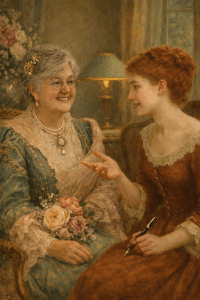
He is there, ever-present. He is part of life, our life, the lives of our ancestors. He lives in our memories, in collective memory; he is there to destroy.
He is good-natured, almost friendly. He has been inviting himself into our homes, our workplaces, and our places of leisure since the dawn of time. Each of us knows him. He has invaded the lives of friends, relatives, and some of our own lives as well. Through the years, traces of his passage can be found in our family histories. He sits at the tables of both the poorest and the most powerful. He poisons relationships. He turns a father, a husband, into a bestial monster; a mother into a wreck unable to care for her children. He creates murderers and perverts. He turns a cultivated dandy into a shadow creeping along walls.
For centuries he was placed on a pedestal. He stood beside the divine, becoming synonymous with celebration and sealed agreements. He was even considered a remedy, yet he has always carried two faces. Even today, part of society continues to cherish and study him, while that very same society condemns and forbids him.
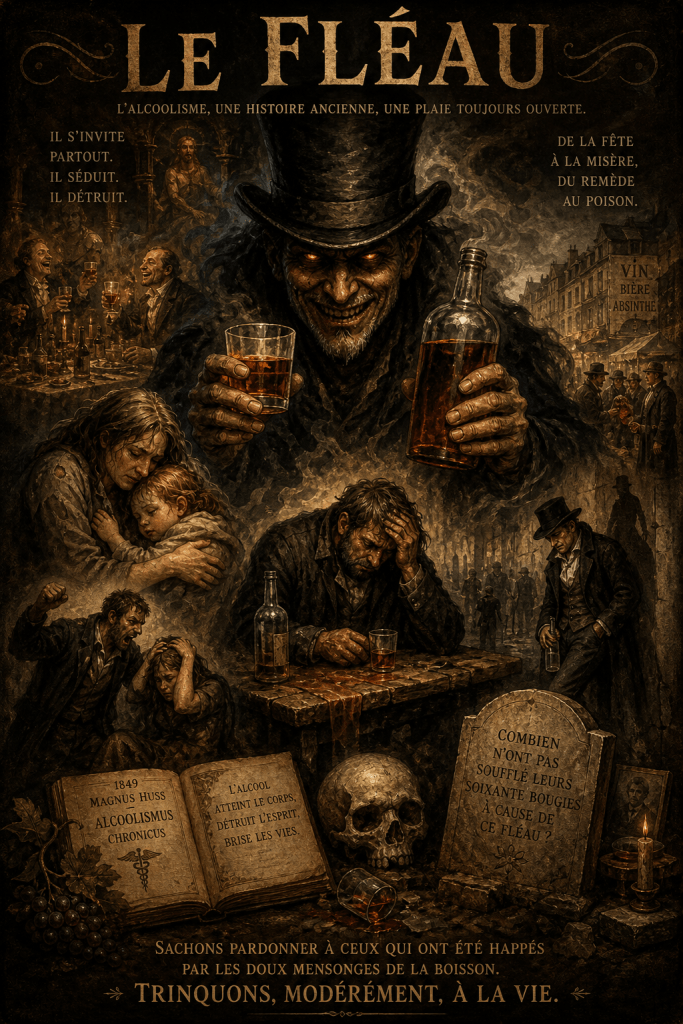
It was in 1849 that the Swedish physician Magnus Huss gave this scourge a name: alcoholism. He discovered that beyond behavioral disorders, alcohol has a devastating effect on the organs.
How many of our ancestors never lived to blow out sixty candles because of this « illness »? Accustomed from childhood to drinking in order to keep warm or to heal themselves, many gradually fell into the torment of alcoholism.
In the vocabulary of our countryside, countless colorful nicknames were used: drunkard, boozer, soak, lush, bottle-drainer, wine barrel, follower of Bacchus, tippler, walking cask, bottle-emptying fool…
Zola and others knew how to describe the ravages of this scourge, which still remains with us in the twenty-first century.
Let us forgive those who were seduced by the sweet lies of drink and raise a glass — in moderation — to life.

