
The fire crackles softly in the hearth, casting shifting shadows upon the walls. The room is quiet, almost outside of time itself. Before me, the desk is covered with loose pages, archive copies, and hastily scribbled notes. Some sheets are smooth and recent, while others still bear the irregular texture of ancient paper, as though the centuries themselves had left their mark upon them. I settle myself and take my time. This is not simply a matter of reading — it is a matter of travelling back.
Watson rests against the inkwell, slightly tilted, as though always ready to intervene.
“You are diving into the past again, Rose!”
I let my fingers glide across a document.
“No, I am listening to it. And good evening to you! Were you not taught proper manners?”
“Good evening, my very dear Rose! Is that better?!!”
“What a dreadful temperament! Let me work!”
“May I stay? Or should I return to Catherine’s pencil holder?”
“Stay, Watson… and refine your mind.”
A silence follows.
Then the first lines come to life.
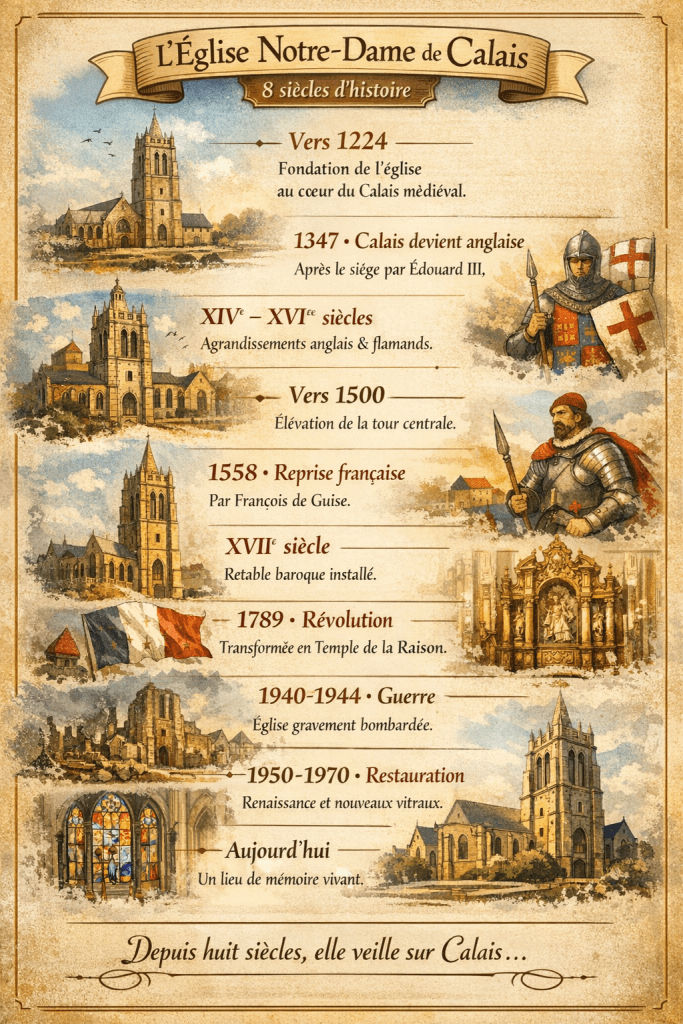
Around 1224.
The words are simple, almost hesitant. There is no grandeur yet, only determination. I see the men, I feel the wind coming from the sea, I hear the ropes creaking beneath the weight of the stones. The church is still only an idea struggling to become real. Nothing is certain, everything is fragile, and yet they are already building for eternity.
Watson seems to straighten imperceptibly.
“They certainly did not intend to build something small.”
I smile faintly.
“No. They wished to show their faith.”
I turn the page. The paper changes. Denser. More assured.
The name alone is enough.
Edward III stands behind every line. The town has fallen, and with it, part of its soul. Yet the church remains. It does not disappear. It adapts. The hands shaping it are no longer the same. The gestures change. The gazes. The style as well.
“She changes sides easily,” Watson mocks.
“She has no choice.”
The documents follow one after another. Fourteenth, fifteenth, sixteenth centuries. The writing becomes more confident, almost rigorous. The additions are precise and measured. Flemish craftsmen. English influences. The structure asserts itself. The lines sharpen. The church takes on that very particular appearance — almost austere, almost defensive.
“A church capable of surviving a siege,” remarks Watson.
“Yes. A church that understands the world surrounding it.”
I pause for a moment, then slide another sheet towards me.
Around 1500.
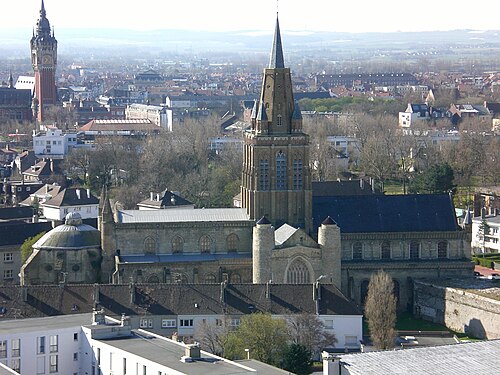
The tower rises.
The words describe its height, its mass, its presence. It is no longer merely a place of worship. It has become a landmark. A fixed point within the landscape, visible from afar — perhaps even from the sea itself.
“She watches over the town,” I say softly.
Watson does not reply.
He understands.
I take another document.
The name appears clearly: François de Guise. The town becomes French once again. The lines are shorter now, almost relieved. Nothing is erased, yet something regains its balance.
“She changes sides again!”
“Watson! She does not forget what she has endured. She has simply adapted.”
I take another document. The handwriting changes once more, more ornate this time.
Seventeenth century.
I do not even need to read it fully. I can already see it.
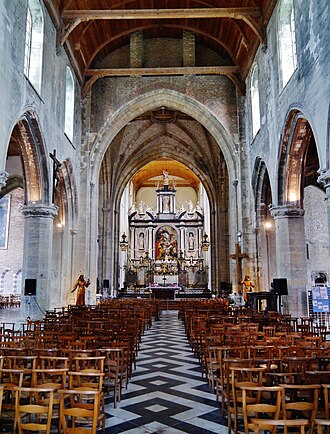
The altarpiece. Marble, gilding, movement. After centuries of restraint, something opens at last. They are no longer building merely to endure… they are building to uplift.
“They wished to touch the heavens,” says Watson.
“Or to prove themselves worthy of them.”
I allow silence to settle once more before continuing.
The words are dry. Brutal, almost.
Temple of Reason.
They transform, divert, attempt to replace. The symbols change, yet the stone remains.
“Poor thing, desacralised!” murmurs Watson.
“But the walls still remember.”
I turn another page.
The return of worship. The sentences are calmer now, like a fragile peace, an attempt to restore an interrupted continuity.
I continue.
1840 to 1860.
The restorations appear discreetly, yet they are essential. Calais changes, grows, prospers through the lace industry. The church follows this movement. It does not dominate — it accompanies.
“She is going to become terribly proud of herself,” Watson remarks.
“Watson!”
“I am joking, I am joking! I know how much she means to the people of Calais. It is only humour… somewhat sharp humour!”
The next page.
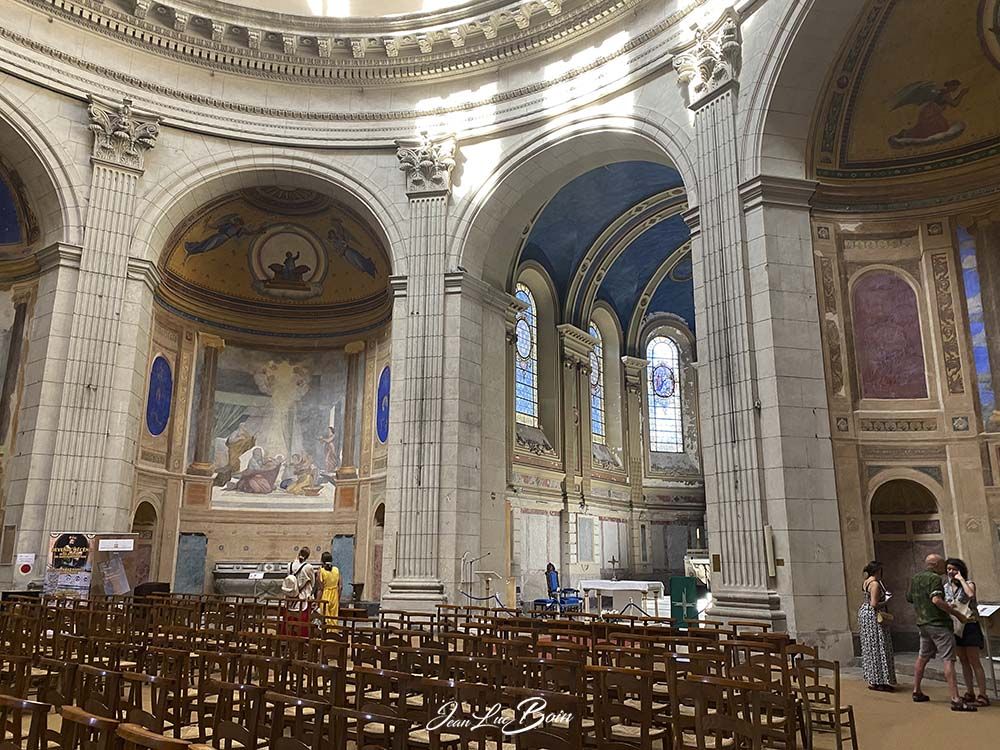
At last, an official gaze falls upon her. No longer merely that of worshippers or townspeople, but that of the State itself, recognising within those stones far more than a place of worship: a fragment of collective memory.
Then, almost without transition, another date.
A wedding.
Charles de Gaulle and Yvonne Vendroux.
A luminous interlude within this long history. A moment when intimacy meets great History.
I pause for a moment before turning the next page.
1940–1944.
The silence grows heavier. The words speak of destruction, bombardments, shattered vaults. The church trembles, like so many others.
“She could have disappeared,” says Watson.
“Yes, Watson, she nearly did! But she remained standing.”
I continue.
The 1950s to the 1970s.
The lines evoke reconstruction. Nothing spectacular. No triumph. Only patience, care, and the determination to repair without betraying.
“Continue,” Watson says softly.
At last, I set the papers aside. The fire still crackles. The room itself has not changed.
“And today?” asks Watson.
I look at the documents, then into the emptiness before me.
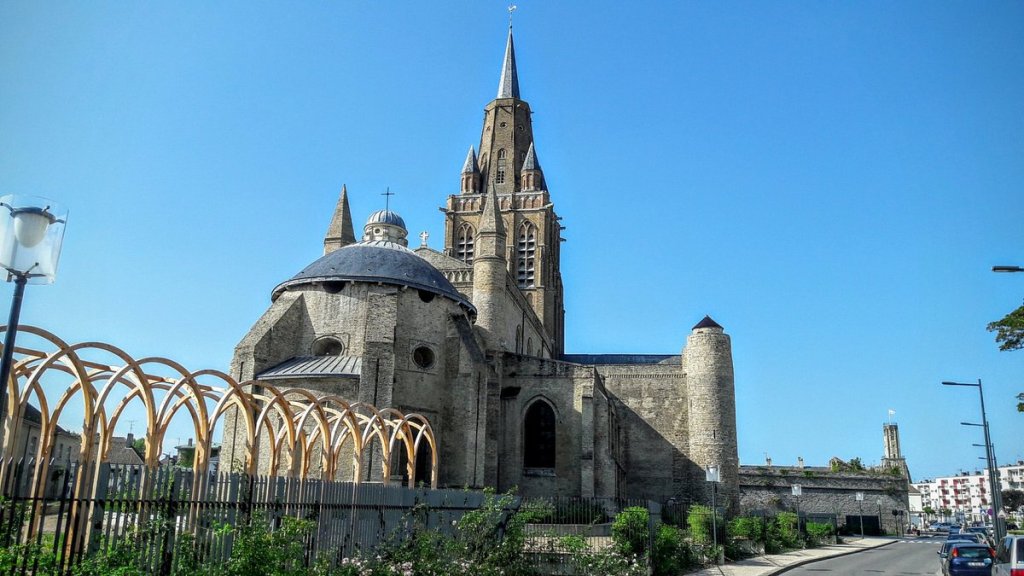
“Today, she still stands. And beside her, a garden.”
“And she remembers.”
“Of course. Stones forget nothing.”
I close my notebook.
Nothing has moved, and yet I have travelled across eight centuries without ever leaving my desk.
“Good evening, Rose. I am returning to my companions in the pencil holder.”
“Very well, Watson. I have been happy to work with you.”
“Good heavens! You have just polished my self-esteem! Thank you, my dear friend!”
Watson departed exactly as he had arrived — noisily and in good humour.
Good night, my dear friend.
Today, I looked differently. Today, I listened to time itself.
 A rebrousse temps généalogie